Therapy for Emotional Healing + Growth

Resources for Healing + Deeper Understanding

This space is an extension of the work we do at Joining with Empathy. Here you’ll find supportive articles, reflections, and carefully selected resources designed to help you feel more grounded, connected, and understood.


These writings are offered to support your emotional wellbeing and self-understanding, whether you are currently in therapy, considering starting, or simply looking for thoughtful guidance as you move through life. Everything shared here is rooted in our trauma-informed, relational approach to care.

Receive reflections and supportive resources in your inbox

Join our email list to receive thoughtful reflections, grounded insights, and gentle guidance from the Joining with Empathy team. When you sign up, you’ll also receive our free tool, Understanding Burnout & Overwhelm, created to help you slow down and make sense of what you’re carrying.


Hands gently holding a branch with dark green leaves and black berries.
Link to Resource
joining with empathy clinic
Link to Blog Post

Empathy is Where Healing Begins

We believe that therapy begins with one powerful principle: empathy. More than just a word, empathy is the heart of our practice—the bridge that connects people in their most vulnerable moments to the possibility of healing.
Link to Resource
therapy for anxiety|therapy for anxiety
Link to Blog Post

Therapy for Anxiety: What to Expect and Why It Works

Anxiety is one of the most common mental health concerns—and thankfully, it’s also highly treatable. At Joining With Empathy, we work with many clients who feel constantly on edge, stuck in overthinking, or overwhelmed by daily life. If that sounds familiar, you’re not alone—and therapy can help.
Link to Resource
start therapy at joining with empathy
Link to Blog Post

You Don’t Have to Have All the Answers to Start Therapy

Many people hesitate to start therapy because they think they need to have it all figured out first. But here’s the truth: you don’t need to have all the answers to start therapy.
Link to Resource
is it time to start therapy
Link to Blog Post

Is it Time to Start Therapy? 6 Signs You're Ready

You don’t have to wait until things fall apart to begin therapy. At Joining with Empathy, we believe therapy can be both a lifeline in hard times and a tool for self-discovery, healing, and growth.
Link to Resource
first therapy session
Link to Blog Post

What to Expect in Your First Therapy Session

Starting therapy can feel exciting—and a little intimidating. At Joining with Empathy, we want to make the process feel as safe, welcoming, and predictable as possible.

Ready to Begin?

Curated Resources + Links

A small and carefully curated collection of practical tools and supportive resources recommended by the Joining with Empathy team. These are designed to help you feel grounded, supported, and connected beyond sessions.

Grounding Relaxation Techniques

Calm your central nervous system & return to the present moment.

5-4-3-2-1 Grounding Exercise

USE YOUR SENSES TO BECOME FULLY PRESENT: 5 things you can see, 4 things you can touch, 3 things you can hear, 2 things you can smell, 1 thing you can taste or feel internally.

Self-Soothing with the Senses

SIGHT: calming images or nature walks.
SOUND: music, white noise, or rain sounds.
TOUCH: soft blanket, textured object.
SMELL: essential oils or fresh scents.
TASTE: peppermint tea, lemon water, grounding snacks.

Box Breathing (4-4-4-4)

Inhale for 4 seconds → Hold for 4 → Exhale for 4 → Hold for 4. Repeat 3–5 rounds.

Mindfulness + Meditation

Simple practices to calm your mind and create space for clarity.

Helpful Apps

INSIGHT TIMER: Free meditations & sound baths.


HEADSPACE OR CALM: Great for anxiety and sleep.


MINDFUL MOMENTS: Set reminders on your phone or work calendar throughout the day to pause, check in, and breathe.

Setting Reminders

MINDFUL MOMENTS: Set reminders throughout the day to pause, check in, and breathe.


WALKING MEDITATIONS: Focus on your breath and surroundings as you move.

Box Breathing (4-4-4-4)

Inhale for 4 seconds → Hold for 4 → Exhale for 4 → Hold for 4. Repeat 3–5 rounds.

Emotion Regulation Tools

Skills for riding out intense emotions.

Distress Tolerance Tool - TIPP

The TIPP skills are quick techniques designed to regulate emotions by shifting your body’s chemistry:


T - Extreme Temperature - Cold Splash


I - Intense Exercise - Jumping Jacks


P - Paced Breathing - Paced Breathing (use the breathing exercises above)


P - Progressive Muscle Relaxation - Tense your body parts then let them relax.

Distress Tolerance Tool - ACCEPTS

When you’re overwhelmed by emotions, you can distract yourself in healthy ways using the ACCEPTS skills:


A – Activities
Do something that engages your mind or body (e.g., read, clean, play a game, go for a walk).


C – Contributing
Shift focus by helping someone else (e.g., volunteer, call a friend, do a small favor).


C – Comparisons
Remind yourself of times you’ve gotten through worse, or compare your situation to others who have faced difficulties and survived.


E – Emotions (Opposite)
Do something that sparks the opposite emotion of what you’re feeling (e.g., watch a funny video when sad, listen to calming music when angry).


P – Pushing Away
Temporarily set aside the distressing situation in your mind; give yourself permission to return to it later.


T – Thoughts
Distract with mental activities (e.g., puzzles, reading, counting, reciting song lyrics or prayers).


S – Sensations
Use your senses to ground yourself (e.g., hold ice, take a hot shower, squeeze a stress ball, smell something calming).

Who We Work With

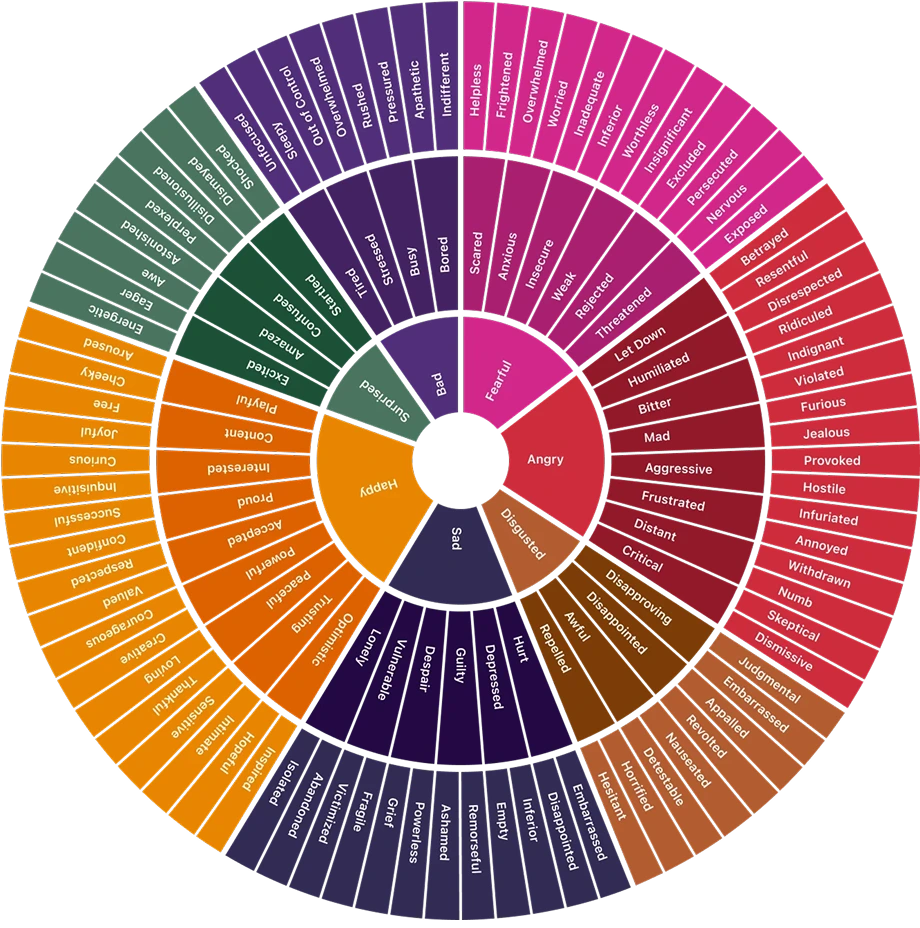
Struggling to Name How You Feel?

THE FEELINGS WHEEL is a powerful mental health tool designed to help you move beyond vague labels like “good” or “bad” and find the exact words that describe your emotional state.

By starting with broad categories, such as sadness, anger, joy, or fear, and working your way into more specific words, the wheel makes it easier to recognize the full depth of what you’re experiencing.

Why is this important? Naming your emotions is the first step toward managing them.